Somerville, Massachusetts
Meet the Maker: Kolika Chatterjee is a Boston-based, self-taught, multidisciplinary glass artist whose practice bridges cultural storytelling and contemporary design through material experimentation. Deeply informed by her West Bengali heritage, Kolika draws inspiration from global architecture, mandalas, kantha textile and anthropological patterns; blending them into living designs in textured glass using tenacity and precision, she picked up somewhere along the way, in a material research lab in the heart of Pennsylvania. Kolika uses two distinct flat shop skills in her glasswork: Tiffany-style stained glass (copper foil) in which glass is cut, ground, foiled, soldered, and finished with patina. Her focus is on tessellation, where a single modular unit can be repeated infinitely and subtle variations can transform the entire composition. These foundational elements recur as motifs, traveling across land and time. Rather than asserting a fixed origin, they suggest continuity and change, challenging linear narratives of beginnings and ends and cultural ownership. The second method is kiln-forming glass frit and powder to make botanical servingware. Mimicking lavish Bengali (and other Southeast Asian) prix fixe meals that are historically served on tropical leaves, the focus on botanical dishware is a nod to cultures where self-care is community care. Science and art meets full circle in this method with precise measurement of frit and powder and programming of glass kilns.
Website | Instagram | Facebook
Somerville, Massachusetts
Meet the Maker: Kolika Chatterjee is a Boston-based, self-taught, multidisciplinary glass artist whose practice bridges cultural storytelling and contemporary design through material experimentation. Deeply informed by her West Bengali heritage, Kolika draws inspiration from global architecture, mandalas, kantha textile and anthropological patterns; blending them into living designs in textured glass using tenacity and precision, she picked up somewhere along the way, in a material research lab in the heart of Pennsylvania. Kolika uses two distinct flat shop skills in her glasswork: Tiffany-style stained glass (copper foil) in which glass is cut, ground, foiled, soldered, and finished with patina. Her focus is on tessellation, where a single modular unit can be repeated infinitely and subtle variations can transform the entire composition. These foundational elements recur as motifs, traveling across land and time. Rather than asserting a fixed origin, they suggest continuity and change, challenging linear narratives of beginnings and ends and cultural ownership. The second method is kiln-forming glass frit and powder to make botanical servingware. Mimicking lavish Bengali (and other Southeast Asian) prix fixe meals that are historically served on tropical leaves, the focus on botanical dishware is a nod to cultures where self-care is community care. Science and art meets full circle in this method with precise measurement of frit and powder and programming of glass kilns.
Website | Instagram | Facebook

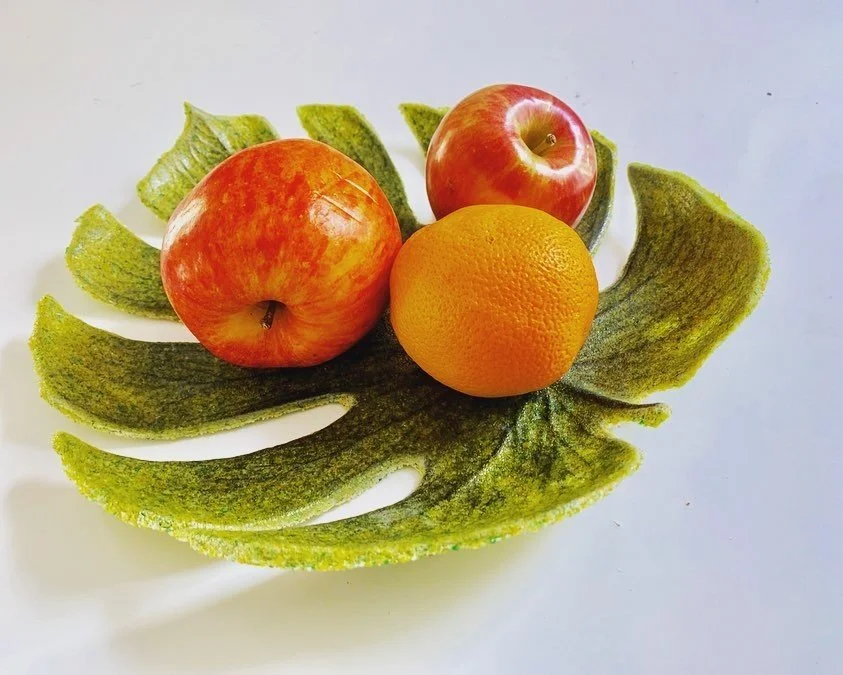 Image 1 of 8
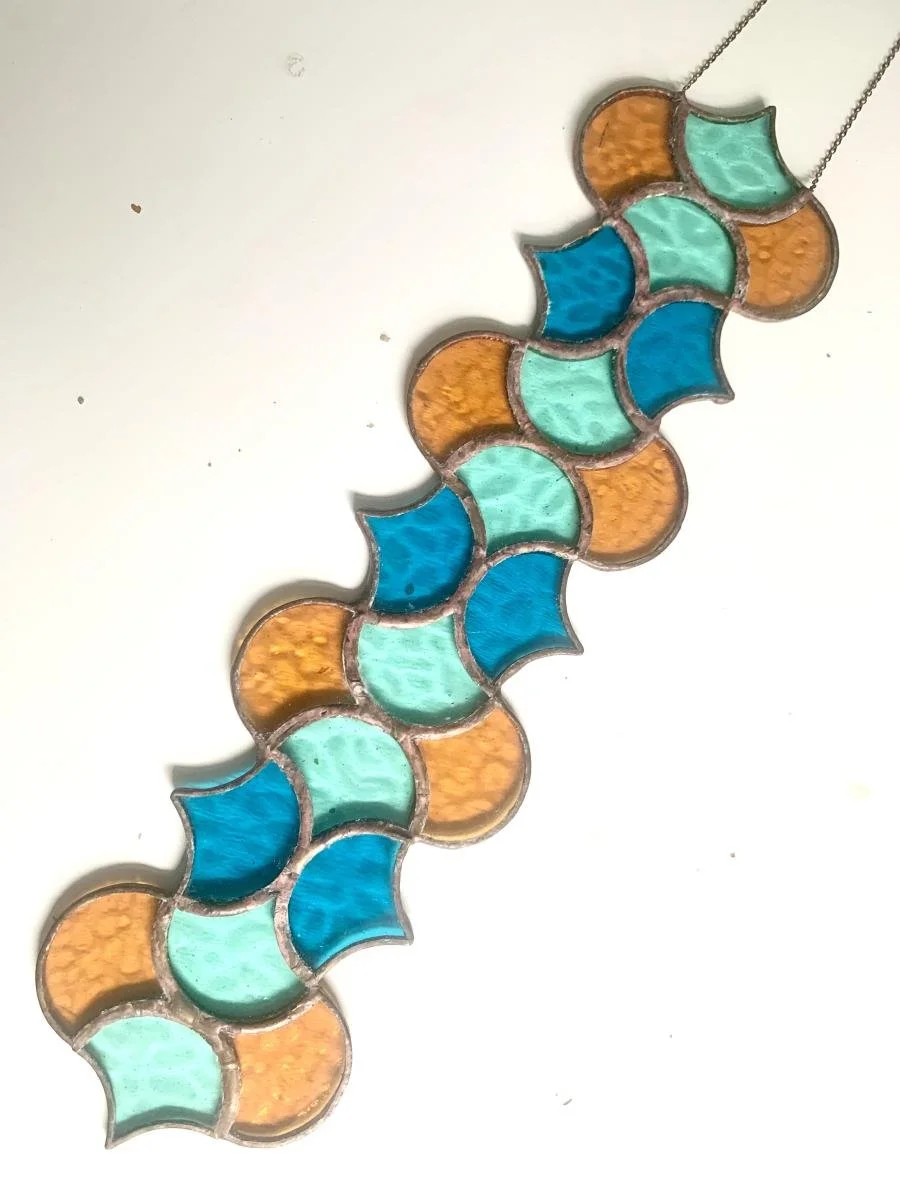 Image 2 of 8
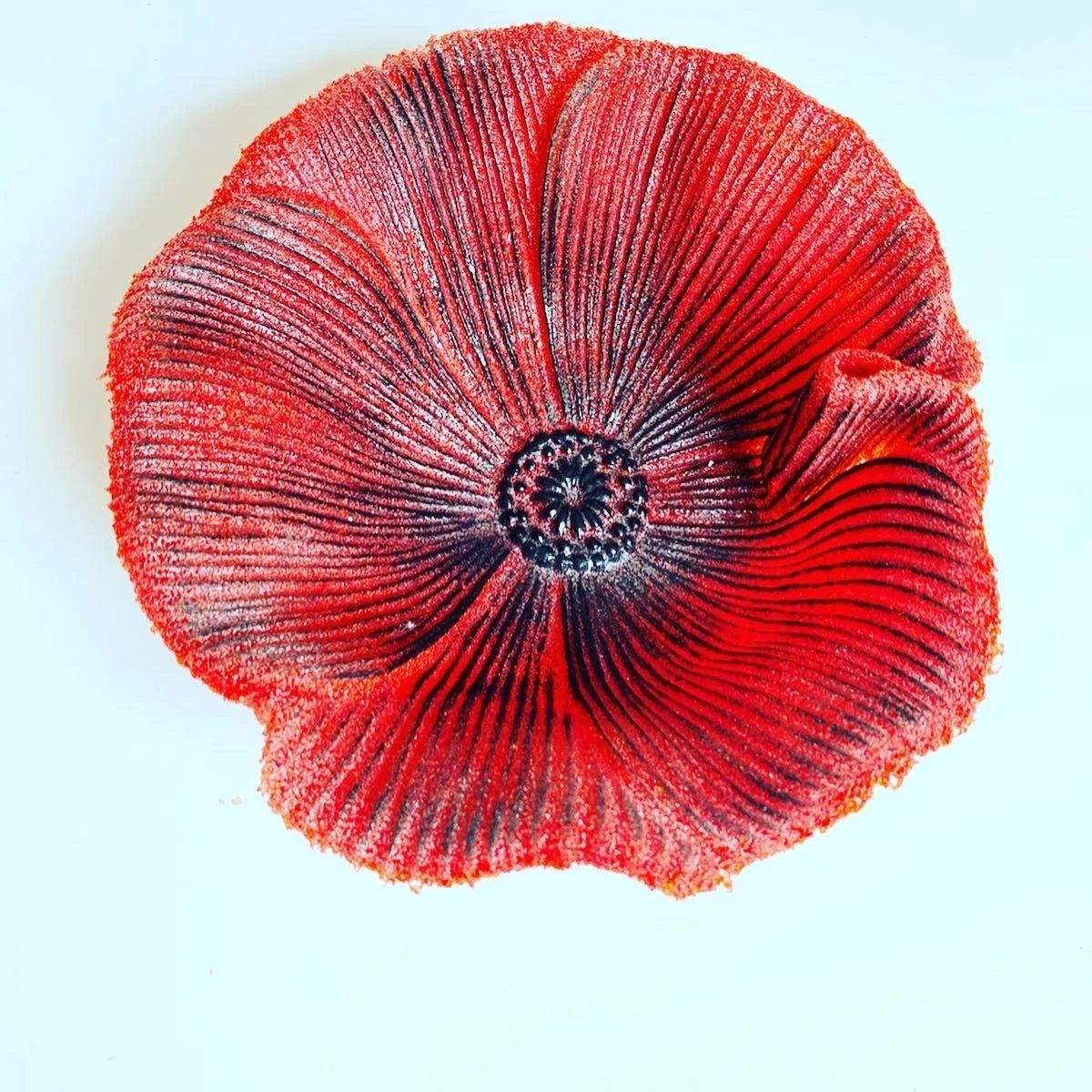 Image 3 of 8
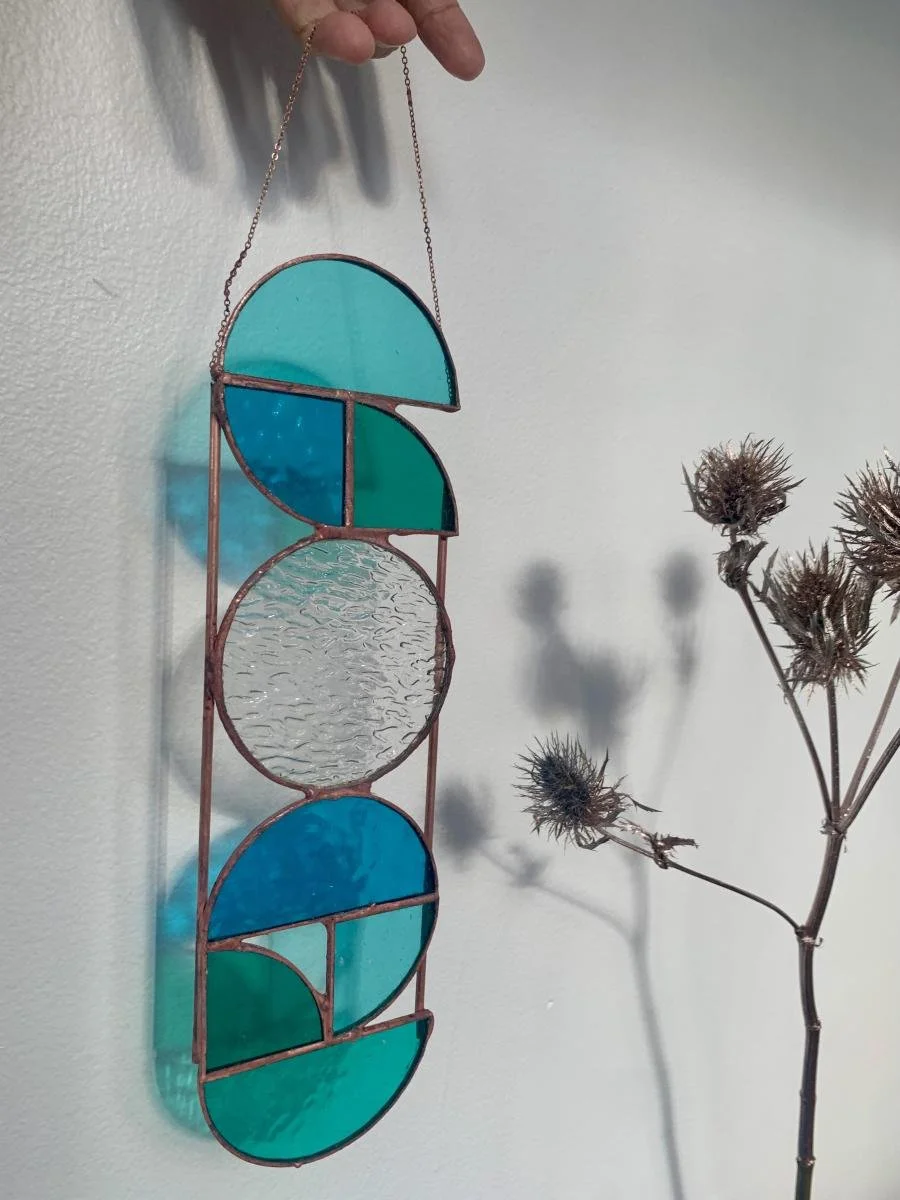 Image 4 of 8
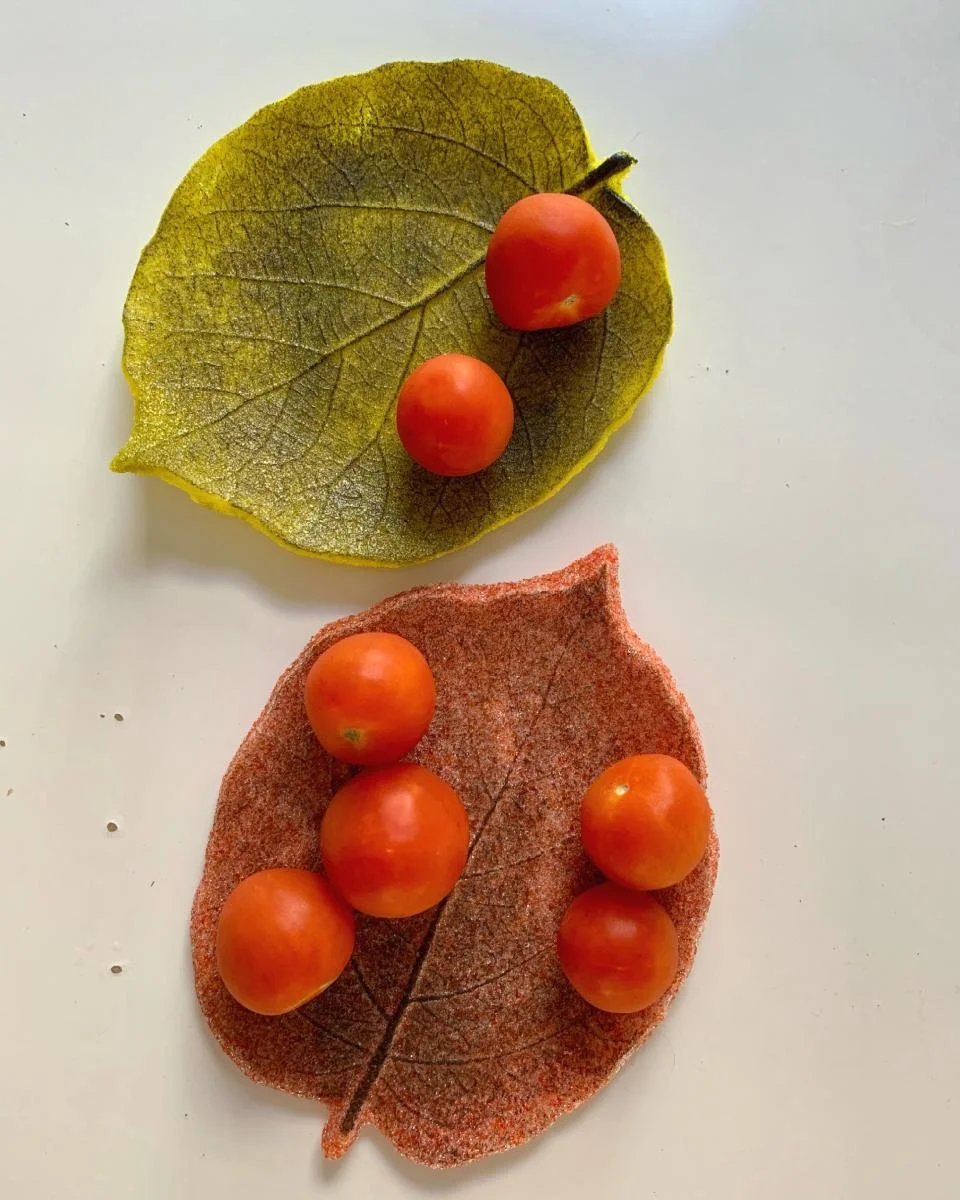 Image 5 of 8
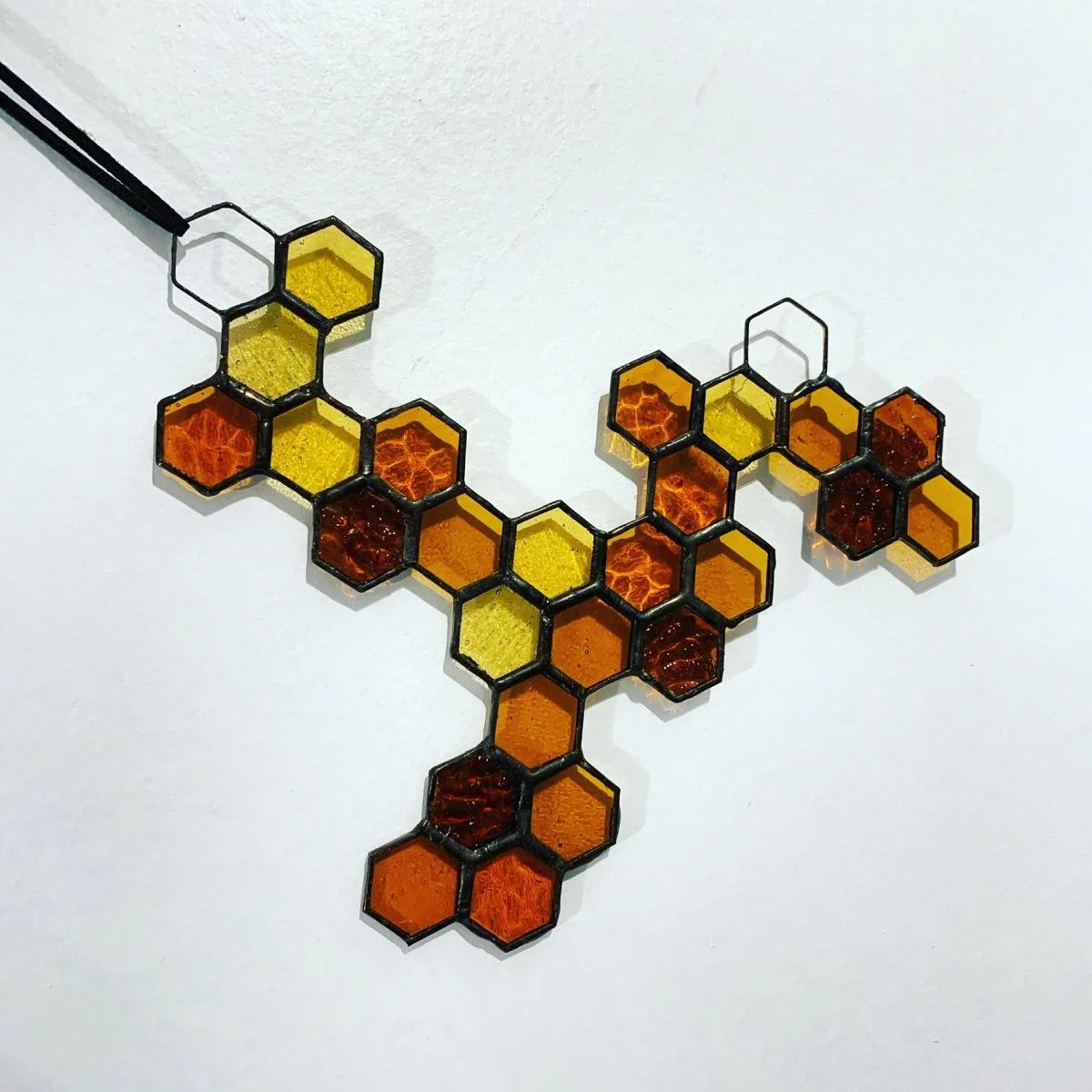 Image 6 of 8
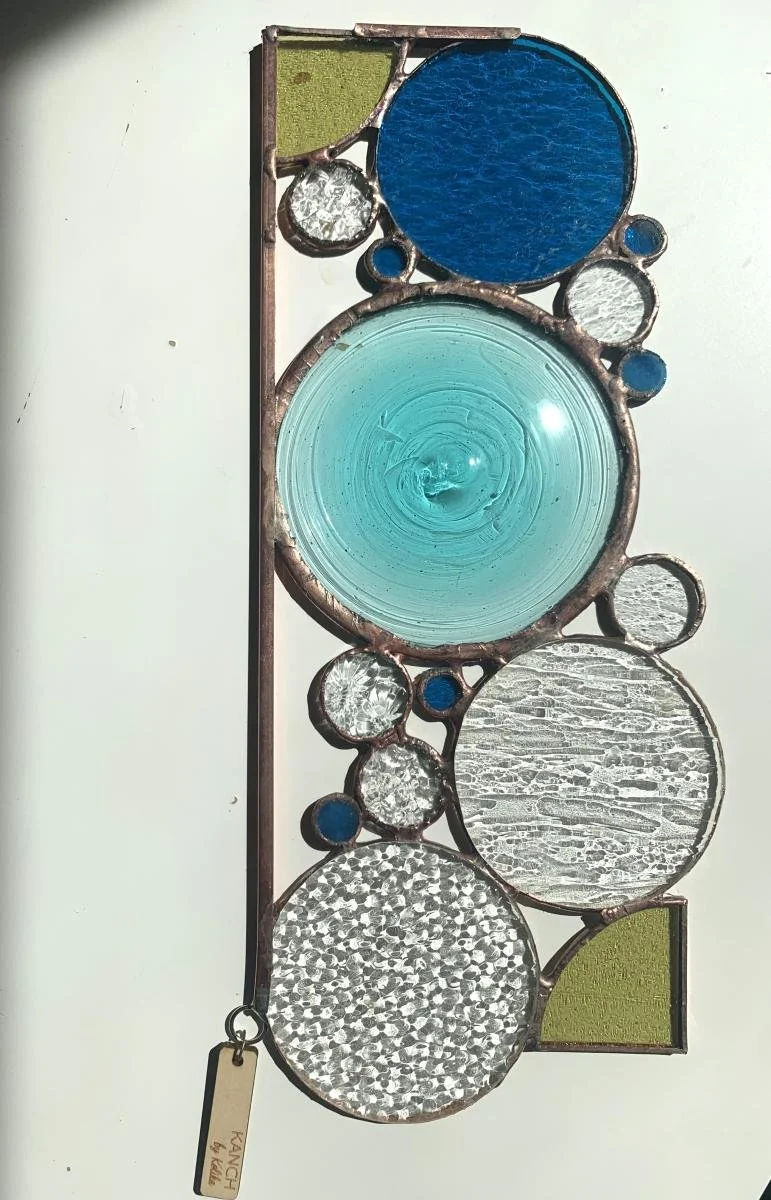 Image 7 of 8
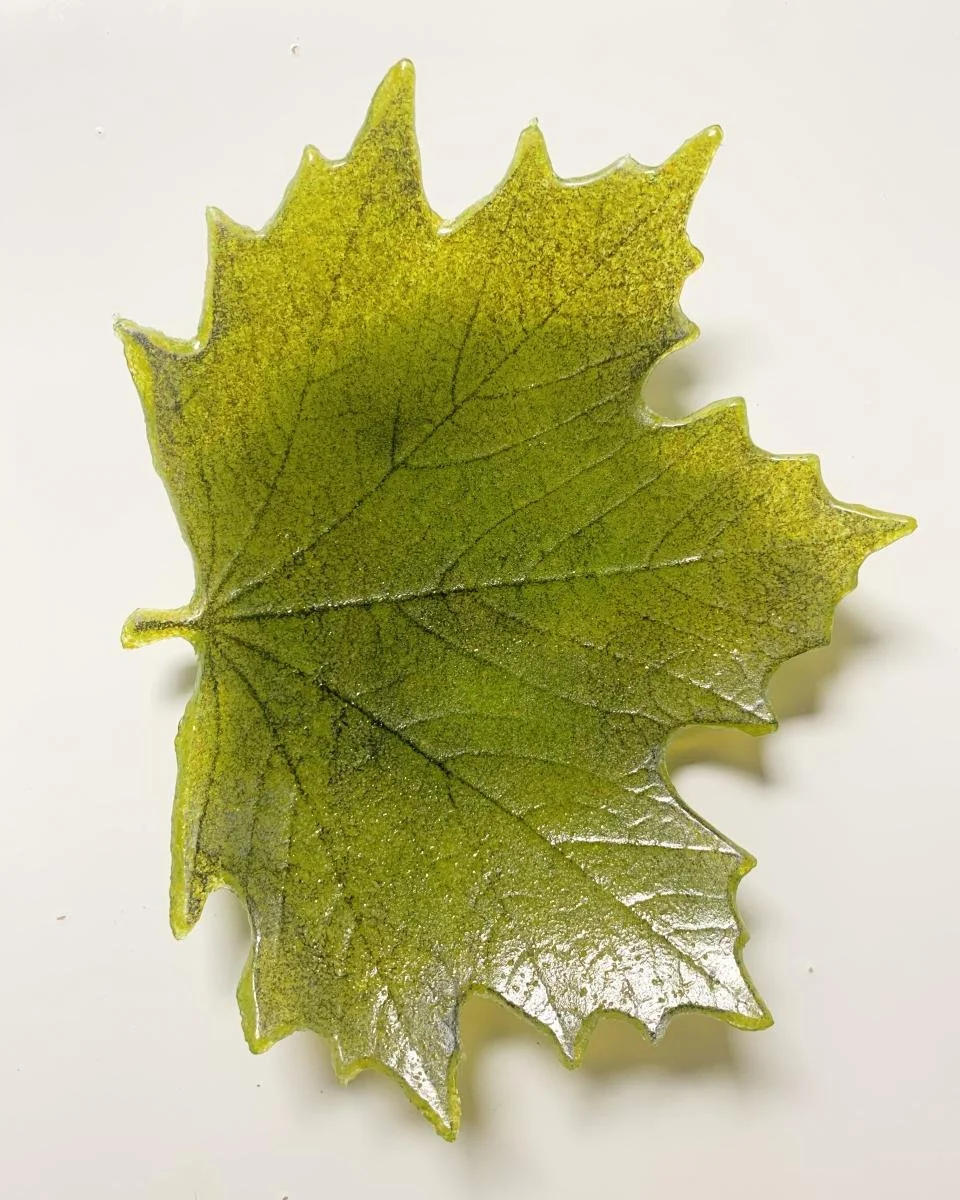 Image 8 of 8